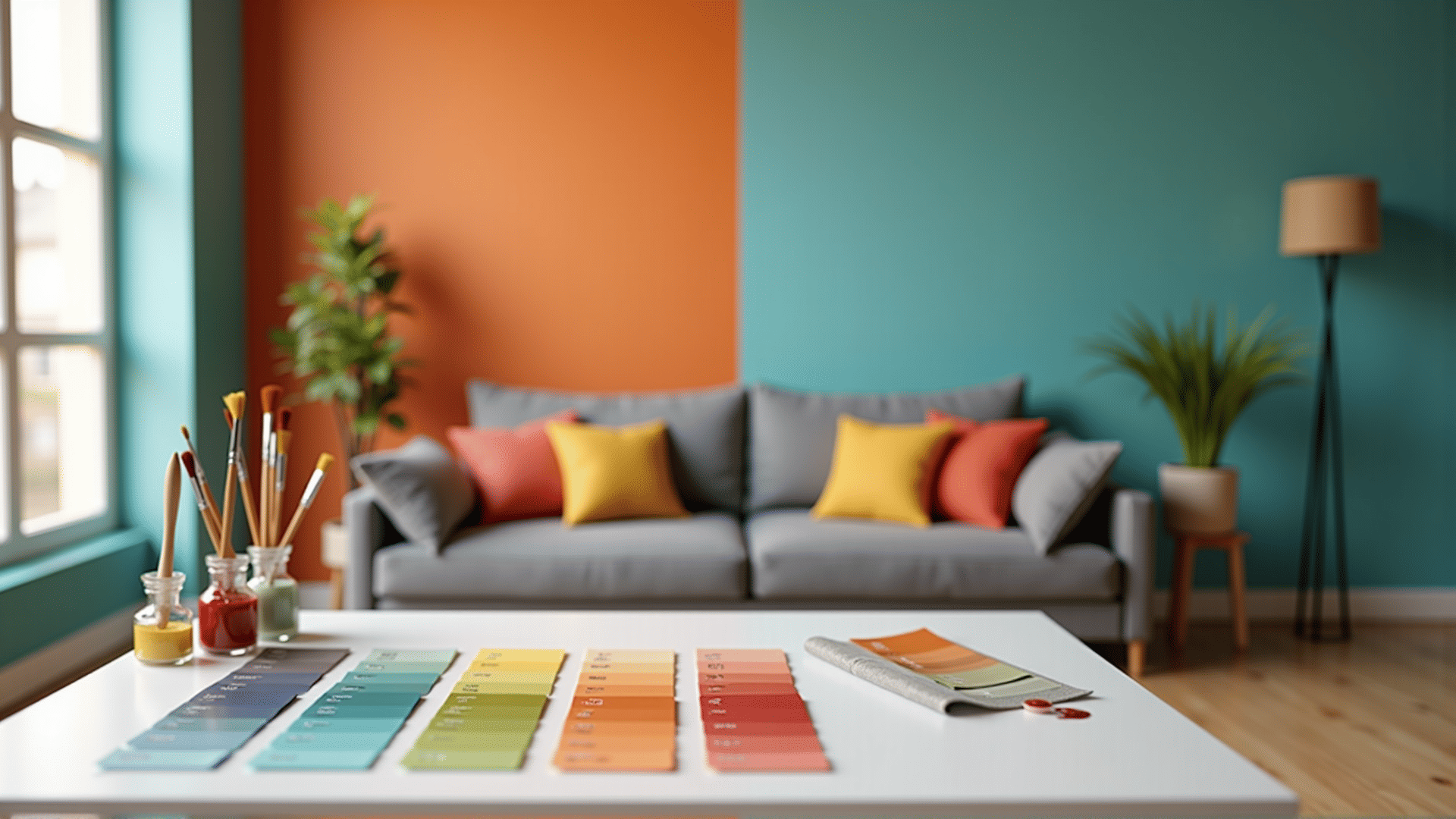
Color theory is a fascinating aspect of interior design that holds the power to change the perception of a space entirely. By understanding the nuances of color relationships and their impact on emotions and moods, one can dramatically alter the ambiance of a home.
At the core of color theory lies the color wheel, developed by Sir Isaac Newton in 1666. The wheel organizes hues into a spectrum that guides us in combining colors harmoniously. At its simplest form, the wheel consists of primary colors (red, blue, yellow), which are mixed to create secondary colors (green, orange, purple). Further mixing produces tertiary colors, resulting in an extensive palette.
Harmony in color usage is key to creating a visually pleasing environment. Analogous color schemes, involving colors adjacent on the wheel, provide a serene and comfortable appeal. For instance, a palette of blues and greens can evoke a sense of peacefulness, reminiscent of a tranquil sea or lush forest.
In contrast, complementary schemes energize a space. These are created by pairing colors opposite each other on the wheel, such as red and green or blue and orange. These combinations promote a vibrant and lively atmosphere, perfect for social areas like living rooms or kitchens.
Alongside harmony, the psychology of color plays a vital role in interior design. Colors can evoke specific emotional responses; for instance, warm colors like reds and yellows are associated with energy and warmth, making them ideal for dining areas where vibrancy is encouraged. Conversely, cool colors such as blues and lavenders tend to have a calming effect, well-suited for bedrooms and bathrooms where relaxation is paramount.
Neutral colors also hold significance in interior design. Shades of white, gray, and beige serve as a foundation, allowing other colors to shine while adding sophistication and balance. Neutrals can accentuate the decor and are often versatile, adapting to various styles and themes.
Lighting further impacts the perception of color in any room. Natural light changes throughout the day, altering how colors appear. North-facing rooms, which tend to receive cooler light, may benefit from warm, inviting hues, whereas south-facing spaces might use cooler tones to balance the warmth.
Texture and material can influence how colors are perceived. Matte finishes absorb light and might deepen a color, while glossy finishes reflect light, adding brightness and visual interest.
Ultimately, the art of color theory in interior design involves crafting a narrative that resonates with individual preferences while considering practical factors like the function of a room and the quality of light. Embracing this understanding can lead to creating spaces that are not only aesthetically pleasing but also emotionally fulfilling. Through deliberate color choices, a home becomes an expression of style and a sanctuary of comfort.